
AYURVEDA
A path of balance, bodily understanding, and long-term inner stability
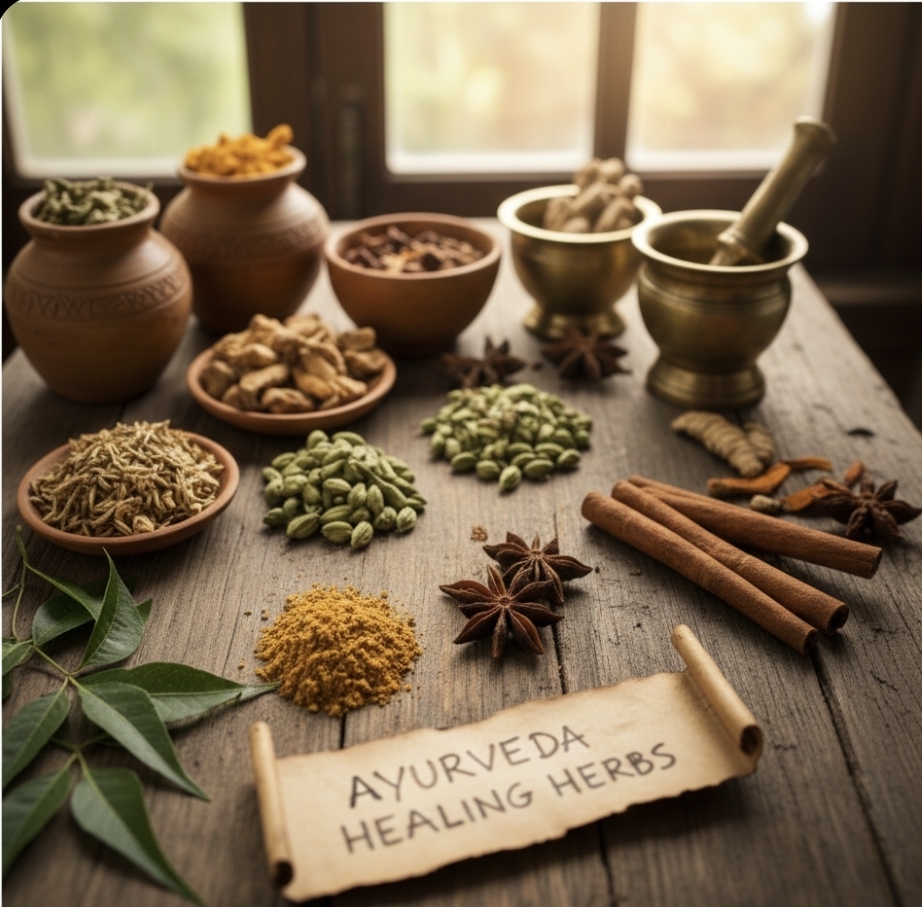
Ayurveda is one of the world’s oldest systems of wellness.
It wasn’t created for trends, branding, or quick fixes.
It was created to teach human beings how to live in alignment with the forces that shape the body, the mind, and the unseen layers of self that modern life often ignores.
It offers a roadmap for how to build a life that doesn’t work against you from the inside.
At its core, Ayurveda is about relationship: the relationship between your body and your habits,
your digestion and your emotions, your sleep and your nervous system, your energy and the choices you make every day.
The body isn’t a mystery to solve; it’s a conversation to learn.
Foundational Principles
Ayurveda sees every person as a specific combination of five primordial elements:
These aren’t poetic concepts. They’re instructions.
They show where imbalance comes from, how it spreads, and what creates relief.
When the elements are balanced, the body cooperates.
When they are not, the body resists the life you’re trying to live.
Ayurveda teaches how to recognize that resistance early, before it becomes illness, burnout, or emotional collapse.
Earth
Structure, stamina, bones, stability
Water
Lubrication, protection, nourishment, emotion
Fire
Digestion, metabolism, clarity, transformation
Air
Movement, circulation, nervous system responses
Space (Ether)
Intuition, silence, mental breathing room
The Doshas: Your Biological and Energetic Blueprint
Every person has a constitutional type, called a dosha, shaped by the elemental forces in their body:
Ayurveda doesn’t judge these tendencies. It teaches how to work with them instead of fighting yourself.
VATA
(Air + Space)
light, quick, creative,
sensitive to overwhelm,
easily ungrounded
imbalance signs: anxiety, coldness, insomnia, digestive irregularity
PITTA
(Fire + Water)
focused, driven,
sharp-minded,
strong digestive fire
imbalance signs: anger, inflammation, irritability, heat symptoms, burnout
KAPHA
(Earth + Water)
steady, nurturing,
patient, grounded,
slow to change
imbalance signs: heaviness, congestion, fatigue, emotional stagnation
Understanding the Body’s Signals
Ayurveda pays attention to the places modern culture ignores:
- the gut as an emotional archive
- the skin as a communication channel
- the nervous system as the doorway into (or out of) peace
- sleep as medicine
- cravings as information
- fatigue as a boundary, not a failure
Imbalance doesn’t come out of nowhere. It begins with whispers:
• poor sleep
• mental fog
• irritable digestion
• sensitivity to noise or stress
• racing thoughts
• heaviness in the chest
Ayurveda teaches how to hear those whispers before they turn into alarms.
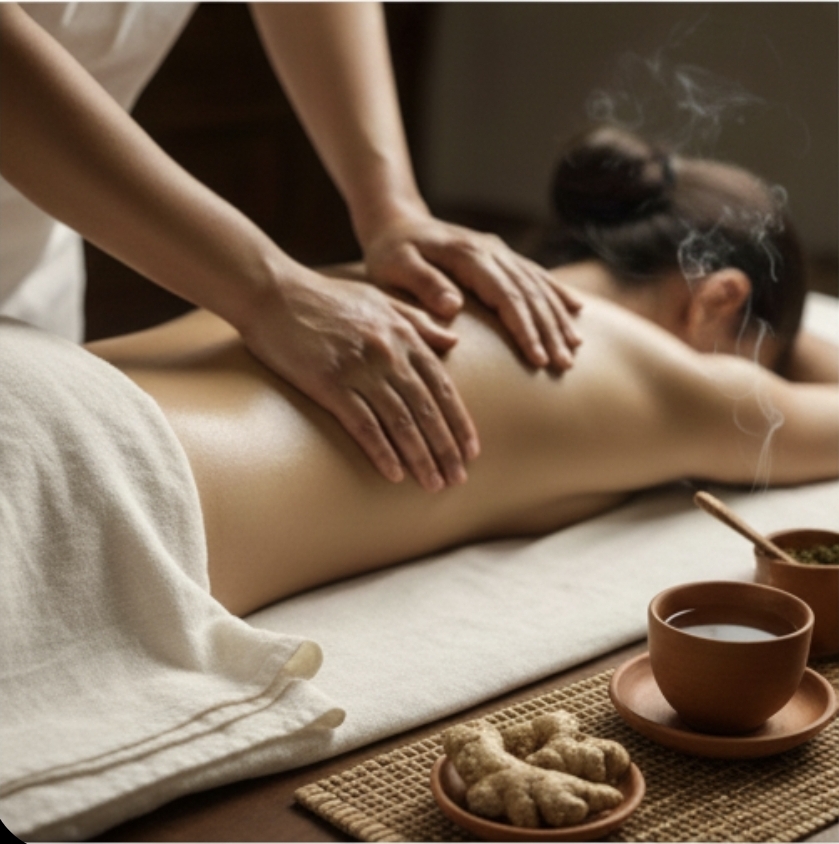

Daily Rhythm and the Art of Regulation
Ayurveda isn’t about perfection. It’s about rhythm. It teaches:
- how to eat in ways that reduce chaos instead of feeding it
- how to match foods to seasons, digestion, and personal constitution
- how to create morning and evening routines that calm the nervous system
- how simple self-massage can regulate stress responses.
- how breath can change the body’s chemistry without force
- how rest becomes fuel instead of guilt
This isn’t a detox. It’s a recalibration.
Food, Digestion, and Emotional Metabolism
Ayurveda treats the digestive system as the core of health. Not to shame or restrict, but to understand.
It asks:
- Does this food support your clarity?
- Does it inflame or soothe?
- Does it nourish or numb?
- Does it ground you or scatter you?
It’s not about eating perfectly. It’s about eating intentionally.
Not to control the body — but to cooperate with it.

Mental and Emotional Clarity
Ayurveda views emotional patterns through the lens of physiology. Not “just feelings,” but signals.
- Overthinking = Vata imbalance
- Irritability or perfectionism = Pitta imbalance
- Emotional heaviness = Kapha imbalance
Instead of forcing mindset changes, it stabilizes the systems that mindset depends on.
This is not bypassing. It is integration.
Who Finds Their Way to Ayurveda
Ayurveda tends to call to people who:
- feel “off” but can’t explain why
- have spiritual sensitivity but no grounding.
- are exhausted by trial-and-error wellness advice.
- want balance without abandoning their identity!
- are tired of surviving and ready to participate in their own life
Ayurveda doesn’t demand readiness. It begins wherever you are standing.

What Ayurveda Ultimately Offers
Not a miracle. Not a cure-all.
Not a trend to chase.
Instead, it offers:
- stability
- clarity
- coherence
- a usable language for understanding your body
- a gentle pathway back to yourself
- the ability to live without feeling like you are always recovering
That is the gift.
What Ayurveda Ultimately Offers
Yon Chemen pou Balans, Konsyans Kò, ak Estabilite Enteryè Dirab
Ayurveda se youn nan sistèm byennèt ki pi ansyen nan mond lan.
Li pa t kreye pou swiv tandans, maketing, oswa ofri gerizon mirak.
Li te kreye pou aprann èt imen kijan pou yo viv an amoni ak fòs ki fòme kò a, espri a, ak dimansyon envizib egzistans lan ke lavi modèn souvan inyore.
Li ofri yon plan pou konstwi yon lavi ki pa febli w anndan.
Nan rasin li, Ayurveda baze sou relasyon: relasyon ki genyen ant kò w ak abitid ou yo, dijesyon w ak emosyon w yo, somèy ak sistèm nève w, enèji w ak chwa ou fè chak jou.
Kò a se pa yon mistè pou rezoud; se yon dyalòg pou eksplore.
Kò a pa yon mistè pou rezoud; se yon konvèsasyon pou aprann.

Prensip Fondamantal yo
Ayurveda wè chak moun kòm yon konbinezon espesifik nan senk eleman fondamantal yo:
Sa yo pa konsèp powetik; yo se enstriksyon. Yo montre orijin:
- kote dezakò kòmanse,
- kijan li gaye,
- kisa ki pote soulajman.
Lè eleman yo an ekilib, kò a kolabore.
Lè yo deregle, kò a reziste lavi w ap eseye viv la.
Ayurveda kijan pou rekonèt rezistans sa a byen bonè, anvan li devlope an maladi, boule pwofesyonèl, oswa yon chit emosyonèl.
Tè
estrikti, andirans, zo, estabilite
Dlo
librasyon, pwoteksyon, nouriti, emosyon
Dife
dijesyon, metabolis, klète, transfòmasyon
Lè
mouvman, sikilasyon, reyaksyon sistèm nève
Espas (Eter)
entwisyon, silans, espas pou espri a respire.
Dosha yo: Plan Byolojik ak Enèjetik Ou
Chak moun gen yon tip konstitisyonèl, yo rele dosha, ki fòme ak eleman ki domine nan kò a:
Ayurveda pa jije tandans sa yo. Li montre kijan pou travay avèk yo, olye pou goumen kont tèt ou.
VATA
(Lè + Espas)
Lejè, rapid,
kreyatif, sansib,
fasil pou fèb
Siy dereglaj: enkyetid, frèt, ensomni, endijesyon
PITTA
(Dife + Dlo)
Fikse, motive,
espri klè,
dijesyon cho g
Siy dereglaj: kòlè, enflamasyon, iritabilite, chalè, fatif
KAPHA
(Tè + Dlo)
Estab, nourisan,
pasyan, poze,
pran tan pou chanje
Siy dereglaj: lou, blokaj, fatig, santiman kole, letaji emosyonèl
Konprann Siy Kò a

Ayurveda bay atansyon sou espas kilti modèn inyore:
- vant la kòm achiv emosyonèl
- po a kòm chanèl kominikasyon
- sistèm nève a kòm pòt pou rantre oswa soti nan lapè
- dòmi kòm medikaman
- anvi manje kòm enfòmasyon
- fatig kòm yon limit, se pa yon echèk
Dereglaj pa sòti nan okenn kote. Li kòmanse ak ti avètisman:
- move somèy.
- tèt lou, konfizyon
- move dijesyon.
- sansiblite ak bri oswa estrès
- panse rapidite
- lestomak chaje
Ayurveda aprann kijan pou tande avètisman sa yo anvan yo tounen yon pwoblem.
Rit Chak Jou ak Atizay Regilasyon
Ayurveda pa chèche pèfeksyon; li chèche rit. Li montre kijan pou:
- manje nan fason ki diminye dezakò olye pou ogmante l
- ajiste manje ak sezon, dijesyon, ak konstitisyon
- kreye rityèl maten ak aswè ki kalme sistèm nève a
- sèvi ak pwòp men w pou fè masaj pou regle estrès
- itilize respirasyon pou chanje chimik kò a san fòs
- pran repo pou eneji, san bay tò
Sa pa yon “detox.” Se yon rekalkilasyon.


Manje, Dijesyon, ak Metabolis Emosyonèl
Ayurveda trete dijesyon kòm sant sante a. Se pa pou wont oswa pinisyon, men pou konpreyansyon.
Li poze kesyon sa yo:
- Manje sa ap sipòte klète mwen?
- Li ap inflame m oswa kalme m?
- Li ap nouri m oswa fè m bliye tèt mwen?
- Li ankre, oswa mete m tèt anba?
Se pa sou manje “pafè.” Se sou manje avèk entansyon. Pa pou kontwole kò a, men pou kolabore avè l.
Klète Mantal ak Emosyonèl
Ayurveda gade modèl emosyonèl atravè fizyoloji, se pa ak emosyon sèlman.
- Twòp panse = dereglaj Vata
- Iritabilite / pèfeksyonis = dereglaj Pitta
- chanjman / bloke emosyonèl = dereglaj Kapha
Li pa fòse panse pozitif. Li estabilize sistèm ki soutni panse a.
Sa pa evitasyon. Se entegrasyon.
Kiyès ki jwenn chemen Ayurveda
Ayurveda souvan rele moun ki:
- santi “gen yon bagay ki pa anfòm” men pa konnen poukisa
- gen sans espirityèl men pa gen rasin
- bouke ak konsèy ki pa mache sou yo
- vle jwenn balans san yo pa pèdi idantite yo
- bouke ap rezizte, epi pare pou viv ankò.
Ayurveda pa mande w prepare. Li kòmanse kote w ye a.
Kisa Ayurveda Finalman Ofri
Se pa yon mirak. Pa yon gerizon majik.
Pa yon tandans pou swiv.
Li ofri:
- estabilite
- klète
- koerans
- yon lang pou konprann kò w
- yon chemen dous pou retounen lakay ou
- kapasite pou viv san santi w ap refè tout tan
Sa, se kado li.